

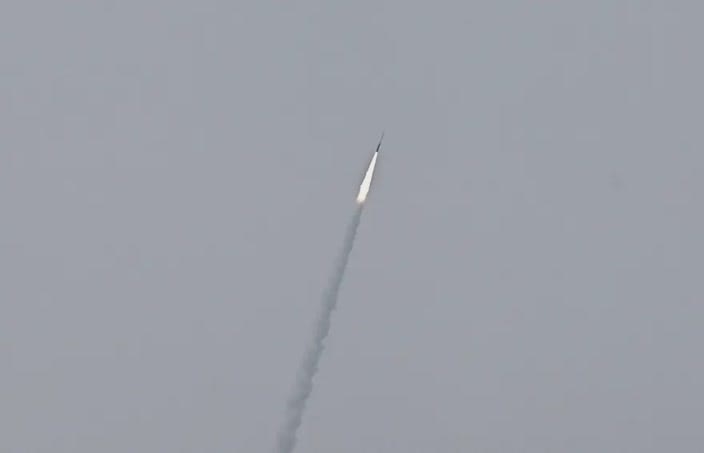
India’s first privately-built orbital rocket, “Vikram-1,” was successfully launched into space today. With this, India becomes the third country — after the United States and China — to successfully send a space rocket built by a private company.
The rocket, developed by Skyroot Aerospace, lifted off from the Satish Dhawan Space Centre in Sriharikota. Designed to send small satellites into low orbits, Vikram-1 stands about as tall as a seven-story building and can carry payloads of up to 350 kilograms.
“Hello Space, we’re here!” Skyroot posted on X as the rocket lifted off. The company announced that it had completed Test Flight-1 and successfully carried out the country’s first private-sector launch.
Prime Minister Narendra Modi described it as a “historic achievement in India’s space journey.” “The growing participation of our private sector opens new horizons and paves the way for new innovations. This success will inspire thousands of young people to be creative and turn even bigger dreams into reality,” Modi said.
Pawan Goenka, Chairman of the government’s Indian National Space Promotion and Authorisation Centre, said the mission — the first orbital launch by a private company — was completed “far beyond expectations.”
The rocket also carried some notable items. Among them were a lab-grown diamond and robotic arms capable of removing space debris. In addition, a tiny rocket made of 18-carat gold was sent up, containing miniature figurines of Indian physicists Vikram Sarabhai and C.V. Raman, along with former president and renowned aerospace engineer A.P.J. Abdul Kalam.
Built on long-term investments made by the Indian Space Research Organisation (ISRO), India’s space industry has been expanding rapidly in recent years. Since the sector was opened to private players in 2020, more than 400 startups now operate within the country’s $8.4 billion space economy.
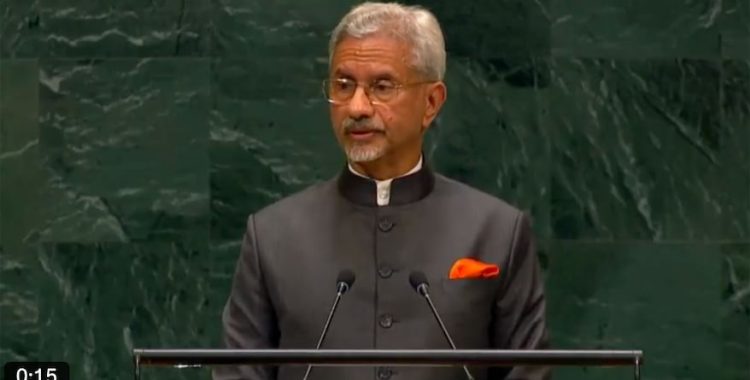
Foreign Minister S. Jaishankar said the achievement has lifted “India’s space ambitions to new heights.” Notably, in August 2023, India also became the fourth country — after Russia, the United States, and China — to successfully land an uncrewed vehicle on the Moon.
Former ISRO Chairman K. Sivan said that thanks to the work being done by space startups, the country is now reaping the “fruits” of the seeds planted when the sector was opened to private players. “A rocket is one of the most challenging and complex technologies in the space system. If an Indian startup can pull this off, it will significantly raise India’s international standing,” he said.