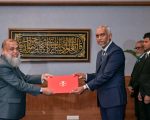



The Salaf Association’s (Jamiyyathu Salaf) stance on the government’s Rasmale project remains unclear. Even after a month of study, the association has not fully endorsed the project, nor has it clearly opposed it. Instead, it has chosen to petition the government with eight conditions. With no firm decision for or against the project, the association now finds itself having to come forward to deny reports circulating about its position.
Some news outlets reported that Salaf supports granting citizenship to people of other faiths in the Maldives. The association has now said that this report is categorically false. Salaf President Sheikh Abdulla bin Mohamed Ibrahim said the association had asked that the Maldives’ 100 percent Islamic identity be guaranteed in every development project. He also said the association believes every government must preserve the Islamic character of the Maldives and must not do anything that undermines it.
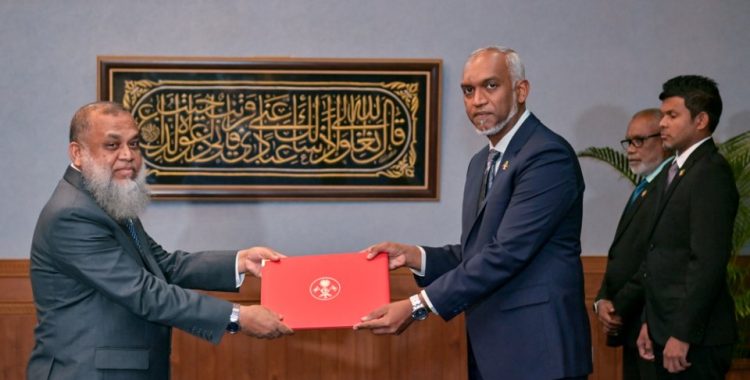
As public concerns over the Rasmale project grew, Salaf announced on 28 September that it was studying the project. The association submitted its petition to the government one month later, after meeting with the relevant government institutions to gather information.
According to the association’s document, the project involves leasing 500 hectares of land in Rasmale to the UAE-based company Eagle Hills for 99 years, to be developed on a real estate basis. It also states that ownership of the land will remain with the state.
The eight points Salaf wants guaranteed in the legal framework and agreements for Rasmale and similar foreign projects are:
- Protecting the Islamic identity and national sovereignty
- Protecting the sovereignty and strategic independence of the state
- Studying changes to the demographic structure and security risks
- Aiming for economic development that brings the greatest benefit to Maldivian citizens
- Establishing a transparent policy with a high level of openness
- Striking a balance between an open economy and national foundations
- Establishing a permanent monitoring system
- Assessing social impacts
In addition, the association called for citizens of “Israel” not to be given opportunities in such projects carried out in the Maldives. It also called for the agreements to be made public, for public consultation, and for monitoring of compliance with Islamic and social standards.
In none of these points has Salaf called for the project to be halted. Nor has it declared support for it. Instead, the association has stated that the government must meet these conditions, and has chosen not to make a firm decision or say whether it is for or against the project. Salaf’s petition itself notes that the true picture of the Rasmale project will only become clear once the project agreement is drawn up and the relevant law is enacted.
As a result, many are questioning what the Salaf Association’s real position on the issue is. Many are also questioning whether the association is truly committed to protecting the religion, since it has given no consideration to the reported links between the owners of the UAE’s Eagle Hills, which is funding the project, and Jews, nor has it voiced any concern about handing a large area of Maldivian land to foreigners for 99 years.